How to compare municipal bonds, treasury bills, and money market funds for idle portfolio cash in taxable accounts

When I hold idle cash inside a taxable account, I do not leave it sitting still unless I have a very short-term need for it. Cash drag matters. Even a few weeks of uninvested money can reduce portfolio efficiency, especially when rates are moving and tax treatment changes the after-tax picture. Over time, I have found that three places deserve a serious comparison: municipal bonds, Treasury bills, and money market funds.Each one can play a useful role, but they are not interchangeable. What...

Read more...

How to compare municipal bonds, treasury bills, and money market funds for idle portfolio cash in taxable accounts
Portfolio Strategies

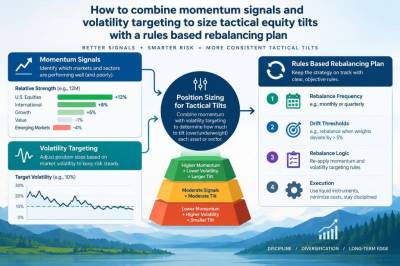
How to combine momentum signals and volatility targeting to size tactical equity tilts with a rules-based rebalancing plan

20/10/2026

I often get asked how to marry two intuitively appealing ideas — momentum signals and volatility targeting — into a practical, rules-based plan...

Read more...
How to combine momentum signals and volatility targeting to size tactical equity tilts with a rules-based rebalancing plan
Risk Management

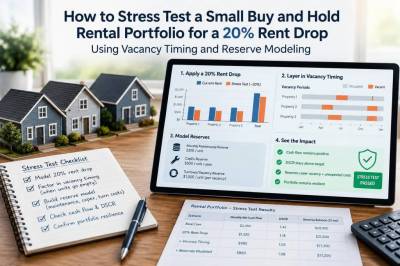
How to stress-test a small buy-and-hold rental portfolio for a 20% rent drop using vacancy timing and reserve modeling

18/10/2026

I run stress tests on small buy-and-hold rental portfolios frequently — not because I expect the worst, but because I want to know what “the...

Read more...
How to stress-test a small buy-and-hold rental portfolio for a 20% rent drop using vacancy timing and reserve modeling

Latest News from Wealthstatista

How to use volatility targeting to smooth drawdowns in a small retirement portfolio
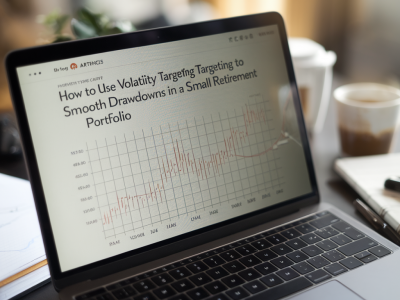
I often get questions from readers who are approaching retirement with a relatively small nest egg and a big fear of sequence-of-returns risk: “How can I avoid a large drawdown in the early years of retirement?” Volatility targeting is one practical technique I use and recommend to help smooth drawdowns while keeping a meaningful allocation to growth assets. In this article I’ll walk you through what volatility targeting is, why it matters...


Read more...

What scenario analysis reveals about your portfolio’s glidepath toward retirement income

I run scenario analysis on my clients’ retirement plans like a pilot runs checklists before takeoff: it’s not glamorous, but it’s the thing that prevents disaster. When I talk about a portfolio’s “glidepath” toward retirement income, I mean the path your asset allocation, expected returns, volatility, and withdrawals together create as you transition from accumulation to distribution. Scenario analysis doesn’t predict the future....

Read more...

What hidden costs are eating your real estate returns: maintenance, vacancies and capital expenditures

When I first started analyzing rental properties, I treated the math on paper like it told the whole story: purchase price, rent, mortgage payment, taxes, and a tidy cap rate. Reality, as I learned the hard way, is messier. Maintenance, vacancies and capital expenditures (CapEx) quietly erode returns in ways that aren’t obvious from purchase spreadsheets or flashy listing photos. In this article I’ll walk through the hidden cost categories...

Read more...

How to evaluate a syndication offer: waterfall structures, sponsor incentives and dilution explained

I review syndication offers regularly, and one thing I’ve learned is that the headline returns rarely tell the whole story. When sponsors pitch a deal, they often lead with attractive IRRs or projected cash yields — but the promise on paper can hide complex distribution mechanics, sponsor incentives, and dilution risks that materially change my realized return. In this piece I’ll walk you through how I evaluate a syndication offer,...

Read more...

When rising interest rates really hit commercial real estate values and which property types survive

Interest rate moves are the kind of macro event that feel abstract until they show up in your bank account or property valuation reports. Over the last decade I’ve watched several rate cycles and advised investors on how to adapt underwriting, debt management, and asset-level operations. In this piece I want to walk you through precisely when rising rates really bite commercial real estate (CRE) values, what drives the timing and magnitude of...

Read more...

How to hedge a concentrated stock position using options without blowing up returns

I’ve helped investors and real estate owners quantify risk and design practical hedges for years, and one of the most common problems I see is a concentrated stock position — often an employee with most of their net worth parked in one company. Options are a powerful, flexible tool to reduce that tail risk without necessarily selling shares and triggering a taxable event or giving up upside. Below I walk through the approaches I use and...

Read more...

How to backtest a simple momentum strategy in excel using free data sources

I often get asked how to validate an investment idea without paying for fancy software or hiring a quant team. One of my favorite ways to do that is to backtest a straightforward momentum strategy in Excel using free data sources. It’s practical, transparent, and — crucially — reproducible. In this article I’ll walk you through the exact steps I use, including where to get data, how to structure your spreadsheet, the formulas to...

Read more...

How much rental yield do you really need to beat inflation in your city

Why rental yield and inflation matter — and why the simple answer rarely worksI get asked a version of the same question a lot: “What rental yield do I need to beat inflation in my city?” It’s an important question, because inflation quietly erodes the purchasing power of rent checks and property values alike. But the answer isn’t a single number you can apply everywhere. The yield you need depends on your financing, taxes, local...

Read more...

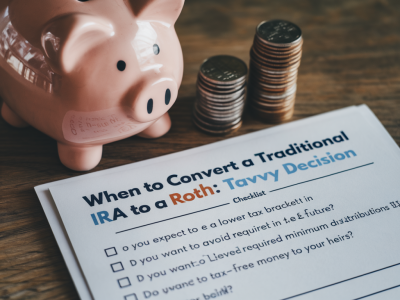
When to convert a traditional ira to a roth: a tax-savvy decision checklist

I convert retirement accounts for the same reason I study market cycles: to tilt the odds in my favor while keeping downside controlled. A Traditional IRA-to-Roth conversion can feel like a one-way door — you pay taxes today to secure tax-free growth and withdrawals later — so the question I ask myself (and every client) is: when does paying that tax now make more sense than deferring it?Why a conversion mattersA Roth IRA grows tax-free and...

Read more...

How to use cap rate, gross rent multiplier and price per door to spot overpriced multifamily deals

I look at multifamily deals the way some people read a restaurant menu: first for the obvious numbers, then for the hidden costs that make a “great value” deceptive. Over the years I’ve relied on three quick, complementary metrics to sniff out overpriced apartment buildings before I spend time on deeper underwriting: cap rate, gross rent multiplier (GRM), and price per door. Each tells a different story. Together, they form a fast,...

Read more...