Real Estate

How to quantify the true buy‑vs‑rent opportunity cost: a math-first model using mortgage rate, expected equity returns and local rent growth

I’m often asked whether buying a home “makes sense” versus continuing to rent — and the honest answer I give is: it depends. The decision is rarely binary. What I aim to do here is give you a math-first framework to quantify the true buy‑vs‑rent opportunity cost using three core inputs: the mortgage rate, expected equity (stock/portfolio) returns on cash you don’t put into the house, and local rent growth. If you like numbers and...

Read more...

How to underwrite a value‑add multifamily deal step‑by‑step: rent roll adjustments, unit-level capex phasing and pro forma stress tests

I underwrite dozens of value‑add multifamily deals a year, and the process often looks simple on a pitch deck and messy in the spreadsheet. If you want to convert a marketing brochure into a realistic pro forma, you need to interrogate the rent roll, model unit‑level capex with realistic phasing, and run stress tests that show how robust returns are to vacancy, rent growth, and economic cycles. Below I walk through the practical,...

Read more...

Obtenir un prêt immobilier en cdd : how to get a mortgage without cdi

I’ve worked with many buyers who don’t have a permanent contract but still dream of owning a home. In this piece I’ll explain, from practical experience and market data, how to obtenir un prêt immobilier en CDD — what banks look for, which documents make the difference, and how to build a file that convinces an underwriter despite the absence of a CDI.Why lenders treat CDD borrowers differentlyAs soon as I review a loan file with a CDD...

Read more...

How to underwrite an office-to-residential conversion using zoning, capex phasing and pro forma rent ramps that survive rising rates

I underwrite office-to-residential conversions the way I underwrite any high-uncertainty real estate play: layer in conservative assumptions, build in optionality, and make sure the math holds up across a range of interest-rate and leasing scenarios. Converting offices to apartments can be an attractive path to capture housing demand, but it’s also a regulatory, construction and market puzzle. Below I walk through the practical steps I use —...

Read more...

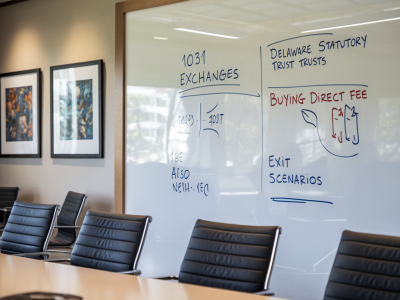
How to structure a 1031 exchange into a Delaware statutory trust (DST) versus buying direct: fees, cash flow and exit scenarios

I often get asked whether it's better to structure a 1031 exchange into a Delaware Statutory Trust (DST) or to buy replacement property directly. Both routes can satisfy the like‑kind requirement for a 1031 exchange, but they feel very different in terms of control, fees, cash flow, liquidity and exit paths. Below I walk through the practical trade‑offs I use when advising investors, with concrete comparisons and the kinds of questions you...

Read more...

how to use rental arbitrage with Airbnb Plus to scale short-term income without owning properties

When I first explored rental arbitrage, I treated it like a financial experiment: could I capture the upfront cash flow benefits of short-term rentals without the capital barrier of buying properties? The answer, with the right strategy and partners, was yes — and one of the most reliable ways to scale that approach has been to pair rental arbitrage with Airbnb Plus. In this article I’ll walk you through what works, what doesn’t, and the...

Read more...

What exact cap rate haircut should you apply for deferred maintenance and how it alters deal pricing

When I underwrite a property with obvious deferred maintenance, the first question I ask myself is not “how much will the repairs cost?” but “how will the market re-price the asset?” Repairs matter because they affect cash flow, liability, and a buyer’s required return. In practice the market responds not only by reducing near-term NOI but by increasing the cap rate a buyer applies — a cap rate “haircut” that’s often larger...

Read more...

How to assess office-to-residential conversion deals: key zoning, construction and rent assumptions

When I started evaluating office-to-residential conversion deals several years ago, I quickly realized they live at the intersection of three disciplines investors frequently underweight: zoning and land-use law, construction feasibility, and rent/market economics. You can't simply take a mid-rise office block, slap in some kitchens and call it a day. The devil — and the value — is in the details. In this piece I walk through the practical...

Read more...

What hidden costs are eating your real estate returns: maintenance, vacancies and capital expenditures

When I first started analyzing rental properties, I treated the math on paper like it told the whole story: purchase price, rent, mortgage payment, taxes, and a tidy cap rate. Reality, as I learned the hard way, is messier. Maintenance, vacancies and capital expenditures (CapEx) quietly erode returns in ways that aren’t obvious from purchase spreadsheets or flashy listing photos. In this article I’ll walk through the hidden cost categories...

Read more...

How to evaluate a syndication offer: waterfall structures, sponsor incentives and dilution explained

I review syndication offers regularly, and one thing I’ve learned is that the headline returns rarely tell the whole story. When sponsors pitch a deal, they often lead with attractive IRRs or projected cash yields — but the promise on paper can hide complex distribution mechanics, sponsor incentives, and dilution risks that materially change my realized return. In this piece I’ll walk you through how I evaluate a syndication offer,...

Read more...