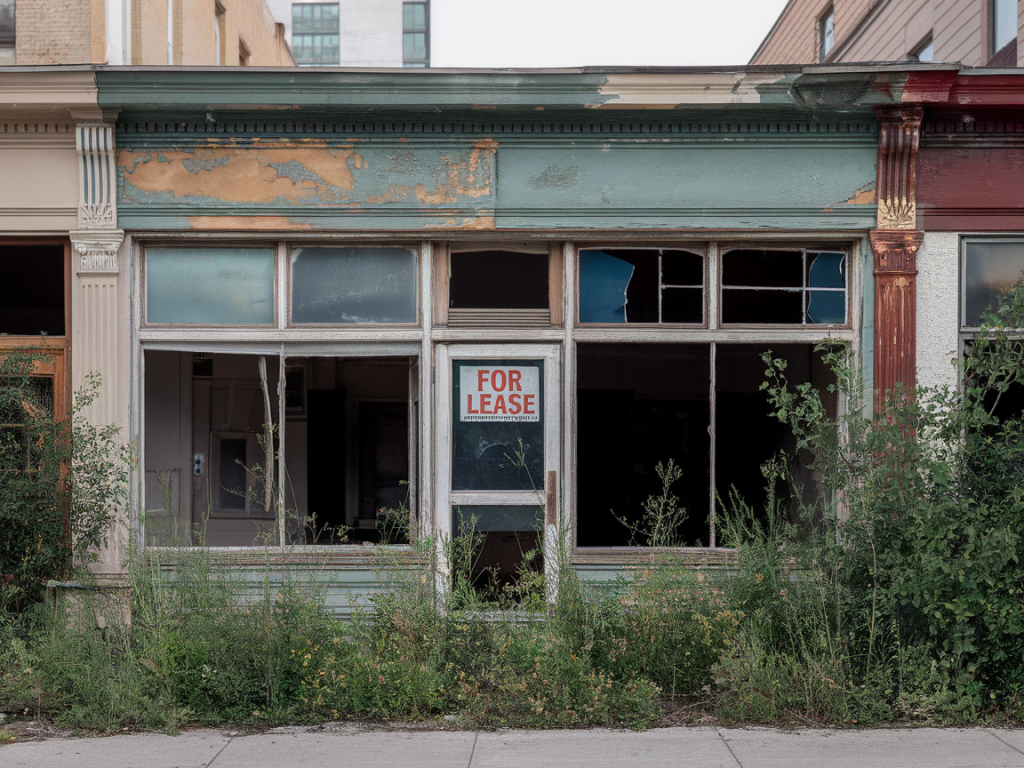
When I underwrite a property with obvious deferred maintenance, the first question I ask myself is not “how much will the repairs cost?” but “how will the market re-price the asset?” Repairs matter because they affect cash flow, liability, and a buyer’s required return. In practice the market responds not only by reducing near-term NOI but by increasing the cap rate a buyer applies — a cap rate “haircut” that’s often larger than the straight repair cost would imply. Below I walk through a practical framework I use to translate deferred maintenance into an appropriate cap rate haircut and show how that haircut changes deal pricing.
Two ways deferred maintenance hits value
Deferred maintenance affects value through two separate channels:
Both channels matter. You can adjust price by projecting lower NOI (a direct cash flow adjustment) or by applying a higher cap rate to the stabilized NOI (a market re-pricing). I prefer to do both when warranted, because sellers often underestimate lost rent and buyers price uncertainty into cap rates.
A simple pricing identity to keep in mind
Remember this identity:
Price = NOI / Cap Rate
If deferred maintenance lowers NOI by $X or increases the cap rate from c to c + Δc, the price changes materially. In practice you should model both: reduce forecasted NOI for realistic downtime and apply an additional cap rate haircut (Δc) to capture increased market risk.
How I estimate the cap rate haircut (Δc)
There’s no single rule, but in underwriting I combine three inputs:
From those inputs I map to a haircut range expressed in basis points (bps). Typical heuristics I use:
| Severity | Typical Δc (basis points) | When to use |
|---|---|---|
| Minor cosmetic | 0–25 bps | Fresh paint, carpets, minor unit rehab |
| Moderate systems | 25–75 bps | HVAC replacements in portions, plumbing updates, moderate capex |
| Major systems / structure | 75–200+ bps | Roof, façade, full mechanical replacement, structural issues, code work |
Why basis points? Because cap rates are expressed in % and small changes can move a lot of price. A 50 bps (0.5%) increase on a 6% cap is non-trivial: Price = NOI/(6%+0.5%) instead of NOI/6%.
Worked examples
Example assumptions: stabilized NOI = $200,000; market cap rate = 6.0% (0.06).
Base price (no deferred maintenance):
Price0 = 200,000 / 0.06 = $3,333,333
Scenario A — moderate deferred maintenance with 50 bps haircut and $20,000 temporary NOI loss:
Adjusted NOI = 200,000 − 20,000 = $180,000
Adjusted cap rate = 6.0% + 0.50% = 6.5% (0.065)
PriceA = 180,000 / 0.065 = $2,769,231
Price impact vs base = −$564,102 (−16.9%)
Scenario B — major deferred maintenance (150 bps) and $40,000 NOI loss:
Adjusted NOI = 160,000
Adjusted cap = 6.0% + 1.50% = 7.5% (0.075)
PriceB = 160,000 / 0.075 = $2,133,333
Price impact vs base = −$1,200,000 (−36.0%)
These examples show two things: small haircuts can have outsized price effects, and combining NOI reductions with a cap rate premium multiplies the impact.
How to convert a repair cost into an equivalent cap rate haircut
Buyers often start with a repair budget and want to know what cap rate discount that implies. Here’s a quick conversion:
Assume repairs cost R and are paid today from purchase proceeds (no financing). One way to equalize is to convert R into an equivalent permanent NOI loss by capitalizing repairs over a chosen horizon or treating them as adjustment to price.
Method 1 — immediate price deduction: New price = Price0 − R. Then implied cap rate Δc satisfies Price0 − R = NOI / (c + Δc). Solve for Δc:
Δc = (NOI / (Price0 − R)) − c
Method 2 — annualized cost: amortize R over a useful life L at discount rate r and treat the annualized cost as an NOI reduction. For a simple approximation, use Annualized R = R / L (or use an annuity factor). Then add that to the NOI loss, and compute effective cap.
Example quick calc: With Price0 = 3,333,333, NOI = 200,000, c = 6%. If R = 200,000 paid today:
Price new = 3,133,333; implied cap = 200,000 / 3,133,333 = 6.384% → Δc ≈ 38.4 bps
Practical negotiation and structuring responses
Once you have a defensible Δc, use it when crafting offers and concession requests. My playbook includes:
Checklist to choose the right haircut
After I run the checklist, I model several scenarios (base, moderate, worst) and price the deal against each. That creates a negotiation envelope and justifies a specific cap rate haircut to counterparties or investment committees.
Tools and templates I use
Ultimately, the size of the cap rate haircut is as much about perception and liquidity as about the repair tab. Two buyers looking at the same cracked roof might choose very different haircuts depending on balance-sheet capacity and strategy. My role when underwriting or advising is to quantify both the known costs and the market premium for uncertainty — and to express that as a concrete Δc and a corresponding offer structure that protects downside while keeping upside achievable.