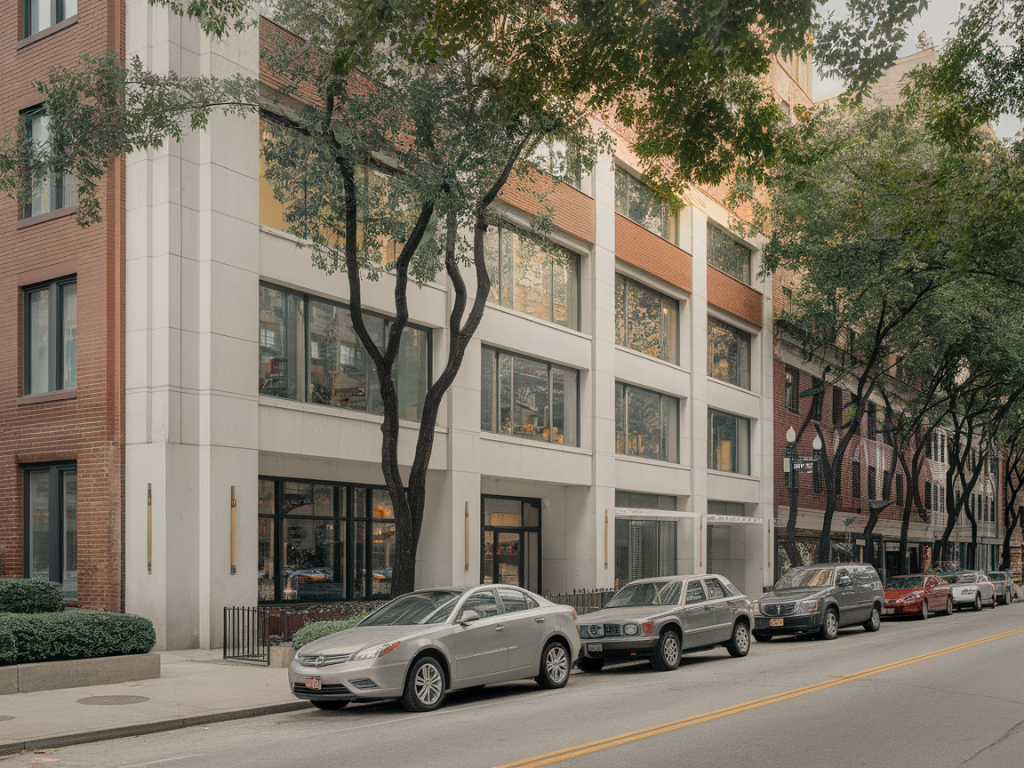
When I started evaluating office-to-residential conversion deals several years ago, I quickly realized they live at the intersection of three disciplines investors frequently underweight: zoning and land-use law, construction feasibility, and rent/market economics. You can't simply take a mid-rise office block, slap in some kitchens and call it a day. The devil — and the value — is in the details. In this piece I walk through the practical checklist I use when assessing conversions, the common assumptions that make or break returns, and simple templates you can reuse to stress-test deals.
Zoning and entitlement: the gating factors
Zoning analysis is step one. Even if the building is structurally convertible, if the local zoning code, historic district restrictions, or building envelope rules prevent the density, unit mix, or façade changes you need, the project is dead or materially more expensive.
Key questions I verify immediately:
- Allowed use: Is residential permitted by-right, by conditional use, or not at all? Conditional use or variance processes can add 6–18 months and cost $25k–$200k depending on community fees and consultant needs.
- Floor Area Ratio (FAR)/Lot coverage: Will adding balconies, internal partitions, or additional floors exceed FAR limits? If you need a bonus density, is there a transfer-of-development-rights (TDR) or incentive program?
- Height and step-back rules: Office floor-to-floor heights are often higher. That can be an advantage (lofts, mezzanines) or a constraint if step-backs or height limits block optimal unit count.
- Parking requirements: Many zoning codes require residential parking per unit. Some jurisdictions allow reduced parking for conversions or permit car-share/managed parking programs — those can materially affect feasibility.
- Historic preservation and façade controls: If the building is in a historic district, you may face strict exterior limitations that raise costs for window replacement or mechanical penetrations.
Always pull the municipal code chapters that apply and, if possible, have a zoning attorney or land-use consultant give a preliminary memo. I budget an initial entitlement contingency equal to 3–5% of project costs for mid-size conversions where zoning is unclear, and 1–2% when residential is expressly permitted.
Structural and mechanical feasibility: what to inspect
After zoning, get a rapid but thorough technical assessment. The conversion path diverges depending on three structural realities:
- Column spacing: Wide column bays (e.g., 30–40 ft) allow efficient 1–2 bedroom unit layouts; tight bays (15–20 ft) can force awkward units and increase corridor area.
- Floor-to-floor height: Offices often have higher floors, which can be turned into desirable loft apartments or split into two levels. But adding plumbing stacks or mechanical systems within the existing ceiling plenum is often costly.
- Core location: If elevators, stairs and mechanical shafts are centralized and align with residential plumbing stack locations, conversion is simpler. If you must create new shafts or increase stair capacity, costs escalate quickly.
My minimum technical package includes:
- A structural engineer’s letter summarizing load capacity and column layout
- An MEP (mechanical, electrical, plumbing) scoping report noting HVAC strategy, required risers, and electrical service adequacy
- A Phase I environmental report and, if asbestos or lead is suspected, a quick abatement estimate
In many North American cities, a realistic construction hard cost range for conversions is $150–$300 per square foot for mid-market apartments; luxury finishes or complex structural changes push this to $350–$450+/sf. I build three cost scenarios — conservative, base, optimistic — and stress-test the IRR under each.
Unit mix and rent assumptions: how I size revenue
Rent assumptions are where too many investors get optimistic. My approach is to triangulate rents from three sources:
- Comparable stabilized buildings in the immediate micro-market (same block or submarket) adjusted for building age and amenity set
- New supply pipeline — are there purpose-built rental developments or condo projects about to deliver that will compete on finishes and price?
- Absorption trends — look at vacancy trends and leasing velocity over the past 12 months, not just headline vacancy today.
I normally model three unit mix strategies:
| Strategy | Profile | Pros | Cons |
|---|---|---|---|
| Studio/light | 40–60% studios, 20–40% 1BR, rest 2BR | Maximizes unit count and rent per sf | Higher turnover, parking pressure |
| Balanced | 30% studios, 50% 1BR, 20% 2BR | Broader market appeal, stable rents | Lower per-sf rent than all-studio |
| Family-focused | 10% studios, 40% 1BR, 50% 2+BR | Longer leases, less turnover | Fewer units, more required parking |
For rent per square foot, I assume a discount to new construction for converted properties that lack modern amenities (e.g., no gym, limited parking). A typical underwriting tack: start with market rent per sf then apply a 5–20% discount depending on amenity delta and building age.
Operating expenses and stabilization timeline
Don't forget that operating expenses for multifamily differ from office. Utilities often shift from owner-paid (in office) to tenant-paid (in residential), but you’ll incur increased property management, turnover, and leasing commissions.
- Operating expense line items to adjust: management fees (typically 3–5% of effective gross income), repairs & maintenance, turnovers, utilities, property taxes (may change post-conversion), insurance.
- Leasing assumptions: account for 3–6 months of downtime per initial unit for marketing and turnover in the stabilization period; assume 6–12 months to reach stabilized occupancy depending on market.
When I run a pro forma I build a monthly cashflow model for the first 24 months to capture lease-up dynamics and leasing concessions. For IRR targets, I generally require a 10–14% levered IRR for riskier conversions in tertiary markets and 14–18%+ for projects with material entitlement or structural work.
Financing, incentives and tax considerations
Conversions can access different financing products: construction loans, CMBS/equity bridges on stabilized assets, or green financing if you’re upgrading energy systems. I always assess:
- Loan-to-cost (LTC) and loan-to-value (LTV) assumptions — lenders often treat conversions as higher risk, limiting LTC to 60–70% and applying higher spreads.
- Tax incentives — some municipalities offer adaptive reuse or affordable-housing incentives, property tax abatements, or density bonuses. These can be deal-makers.
- Depreciation and cost segregation opportunities — valuable for taxable investors after stabilization.
Pro tip: talk to at least two local lenders and a tax advisor before finalizing the bid. The spread between lender terms can change your equity requirement and return materially.
Practical checklist and a simple stress-test template
Here’s the checklist I run through before making an offer:
- Zoning confirmation and preliminary entitlement budget
- Structural and MEP scoping reports
- Comparative rent survey and new supply pipeline analysis
- Three construction cost scenarios and a 10–15% construction contingency
- Operating expense adjustments and lease-up timeline
- Financing check with two lenders and review of incentives
- Exit sale comps and sensitivity to cap rate movement
And a minimal stress-test: reduce assumed stabilized rent by 10% and increase construction costs by 15% — if levered IRR remains above your hurdle (typically 12–14% for me depending on market risk), the deal merits deeper diligence. If not, walk.
These conversions are often messy but can create outsized value where office fundamentals are weak and housing demand is strong. The winners are the investors who plan for zoning friction, build realistic construction budgets, and root rent assumptions in local reality rather than aspiration.